

In the context of the business collecting data from various platforms such as sales, advertising, CRM or electronic commercial channels, data misdirected, lack or disparity is inevitable. This is why. Data Cleaning Cleaning data became the first and most important step before putting data into analysis or construction of the dashboard.
This article will help you to understand Data Cleaning, why the data is prone to error, the standard of a clean data set, the common difficulty and how DB Connector helps automate the entire process of standardisation.
1. What's Data Cleaning?
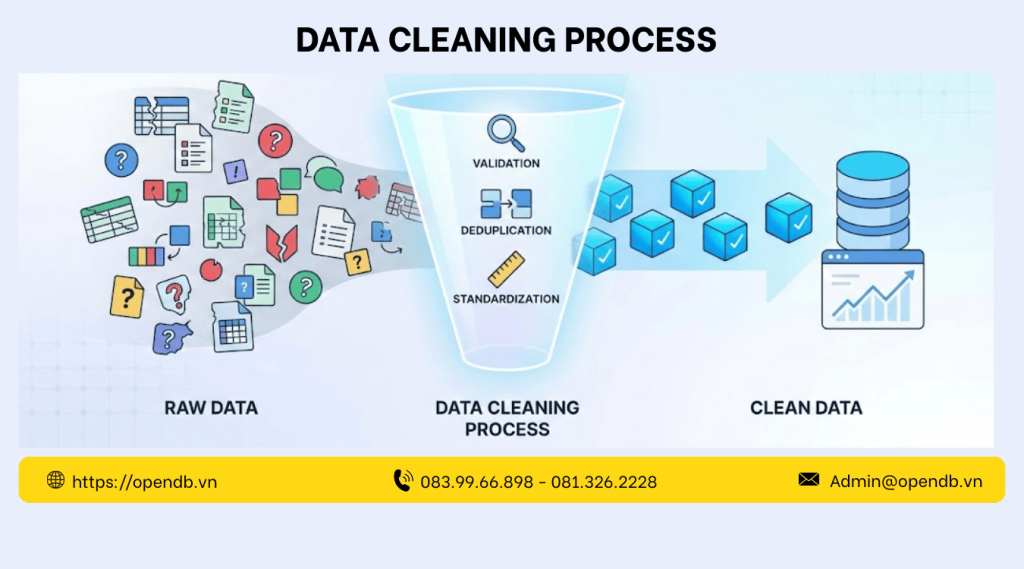
Data Cleaning is the entire process of cleaning data, including: testing, detecting and handling irregularities in data such as: false information, insubstantation, lack of or invalidity. The goal is to ensure that every data used in analysis and report is accurate, reliable and uniform.
The process of cleaning data involves not only removing error logs but also Normalise formatThe same way of recording the data between sources and making sure that the data follows the business's business rules.
For example, when the business synthesizes customer data from CRM, Facebook Ads and Shopee, the name of the customer may be saved in various ways: Census A, Adobe Van A, A. Data Cleaning will help standardise all about the same format, avoid overlap and confusion in analysis.
Lưu ý: Data Cleaning Unlike Data Transformation. While Data Cleaning Focus on making sure the data is correct, valid and reliable, Data Transformation Focus on changing the structure or data format to match the purpose of analysis or the target system.
2. Why do data often fail?
The problems in the data often stem from multiple causes such as:
- Manual input: The input errors such as spelling, ignoring information or entering the wrong format are very likely to occur. If this data is synthesized from multiple sources, errors will accumulate and create inaccurate reports.
- The source does not sync: Each department or system can store data according to different standards. For example, customer address information in CRM may differ from data in the sales system. If not standardized, the data becomes fragmented and hard to analyze.
- Data is missing or obsolete: Some data may not be updated yet. When using this data for analysis, businesses are at risk of making decisions based on information that does not reflect the facts.
- Repetitive data: When combining data from multiple platforms, a customer or a single may appear multiple times, increasing the number in revenue analysis, customer behavior or advertising efficiency.
- Difference in Formation: Dates, customer names, measurement units or non-consistencies make data difficult to perceive and analyze. Data Cleaning is a necessary step in standardizing these formats.
Three. 5 Elements for data are considered clean
A quality data set to meet 5 core criteria:
- Valdity Validity: Data has to abide by the rules of affairs. For example: the phone number must be sufficient 10 digits, the email must be correct in format. Data Cleaning help detect and edit these invalid values.
- Accuby precision: Data reflects the right practical value. A valid but nonexistent email is still considered inaccurate data.
- Complete Computing Completeness: Important data fields are not left empty. For example, to analyze revenues, singles or sale fields must have full data.
- Consistency consistency: Data must be the same on all systems. For example, the same client cannot be just written that Hanoi is both HN on different systems. Data Cleaning Standards Data to maintain consistentity.
- Uniformity uniformity: All data must obey the same format and unit. For example: sales should be united in the NDA instead of in parallel to the NDA and the USDA. This helps visualize and analyze data more effectively.
Four. The common difficulty of cleaning data
Although Data Cleaning Importantly, many businesses face the following difficulties:
- Missing knowledge of the source of the data failed: Not knowing the starting point to fix the error is not complete or missing important data.
- The risk of losing valuable data: When eliminating incorrect data, business accidentally erases critical information, affecting analysis.
- The data is constantly changing: sales, advertising and CRM systems are constantly updated, making clean data maintenance a challenge.
- Spending time handling manuals: When businesses have to clean data from dozens of advertising accounts, fanspage, time, the job takes hours each day.
- There is no process of standardisation of data: Each department does a way to make data dissimilar, leading to inaccurate and difficult analysis reports.
Five. Autocleaning Data with DB Connector
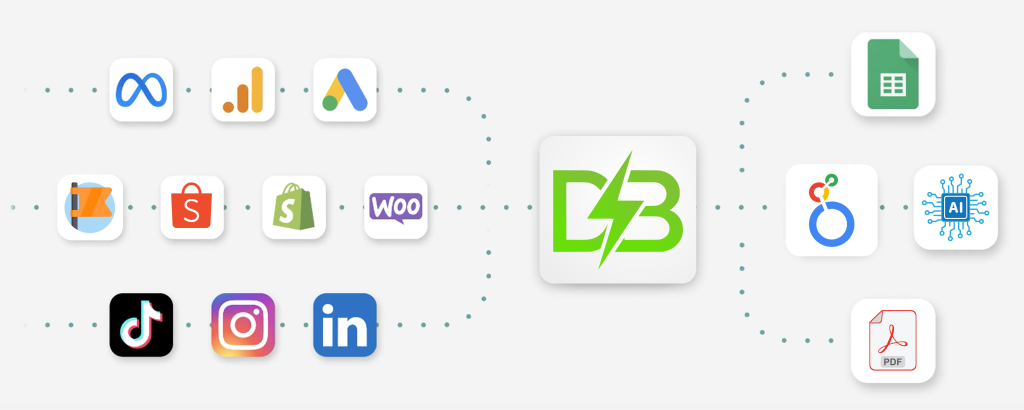
Instead of spending hours cleaning manual data, DB Connector Helps the business automate the entire Data Cleaning process and standardise data multisource.
- Multisource data connection: DB Connector Retrieved data from advertising, sales, CRM, electronic trading floor... about a single place, mitigation and deviation.
- Automatic synchronization and data update: No manual input required. Data is always new, accurate and ready for immediate analysis.
- Normalise automatic data: Format, field name and value are standardised as soon as synchronised, helping data to be clean and unified.
- Save time and reduce the risk of error: Business does not need to worry about losing critical data or wasting time handling crafts. All Processes Data Cleaning all automated.
- Ready for the dashboard and deep analysis: The data has been cleaned and standardized can be directly connected to the dashboard, the BI system or the analysis tools, which help make quick and accurate decisions.
Conclusion
Data Cleaning is the basis for all data analysis activities to be accurate and effective. A clean data set helps businesses make confident decisions, optimize marketing costs, operate smoothly, and build sustainable data systems.
With DB ConnectorThe process of cleansing and standardise data multiple sources become Automatic, fast and reliableFreed hours of manual work, and at the same time helped the business focus on the insight mining from the data.

